Premium Blockboard for Cabinets, Doors and Furniture
Premium blockboard is a practical substrate for interior cabinetry, wardrobe and door components, and furniture when the specification matches the component design. Moluosen Technology Limited supplies blockboard with Chinese fir or eucalyptus strip cores for indoor, non-structural applications, with selectable panel thicknesses and face treatments including TFL, HDF, wood veneer, PET and HPL. Choosing the right combination starts with the component’s size, finish, moisture exposure and fabrication method—not simply a preference for a particular board name.
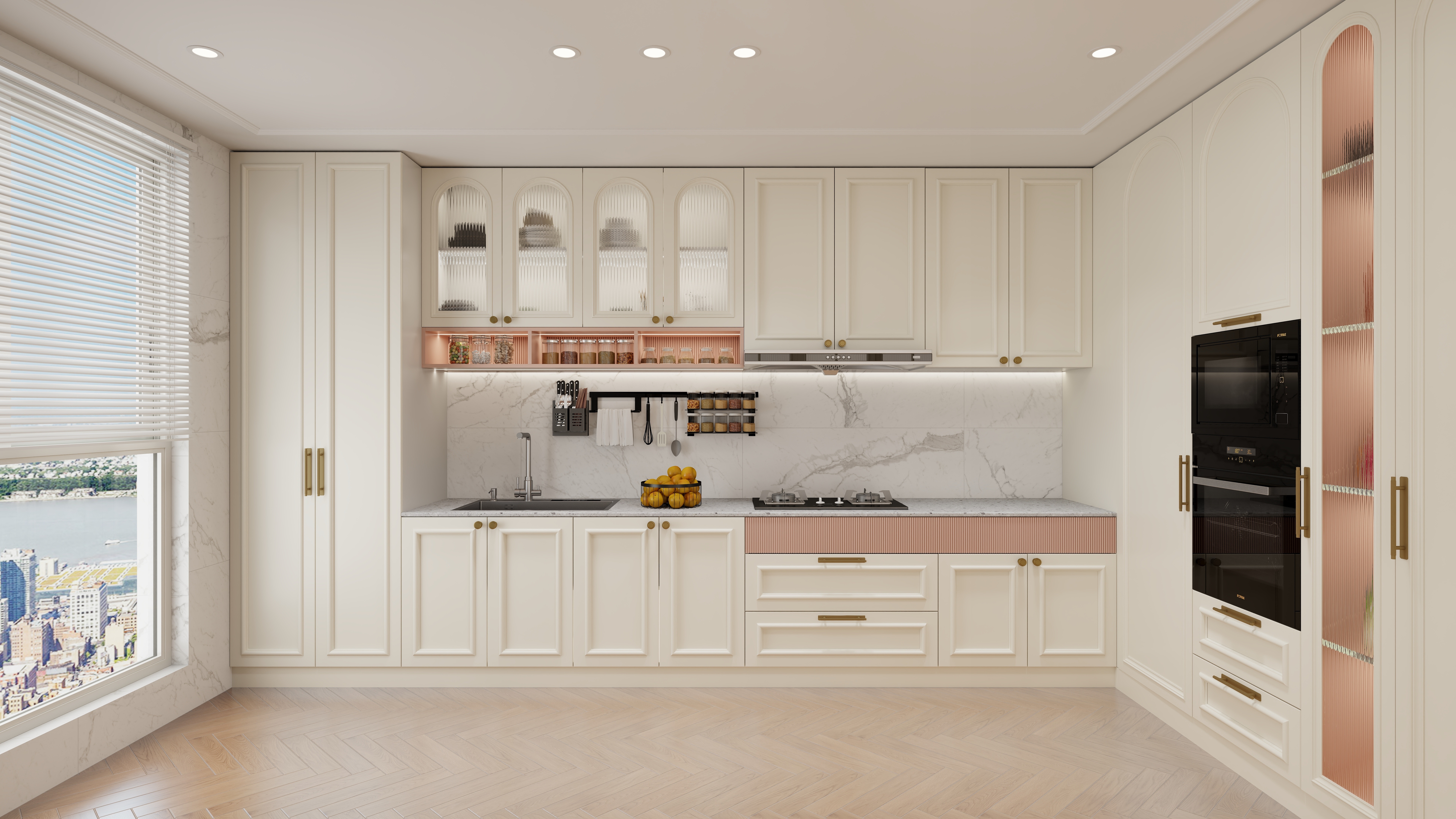
For buyers and furniture manufacturers, blockboard’s value lies in the combination of a strip-core substrate, decorative face choices and the ability to specify different thicknesses. Moluosen’s blockboard range includes MLS001 Chinese fir core blockboard and MLS002 eucalyptus core blockboard. Both are described for interior, non-structural use, including kitchen cabinets, wardrobes, doors, wall panels and furniture. Final suitability depends on the selected panel configuration and the requirements of the finished component.
What blockboard does in an interior project
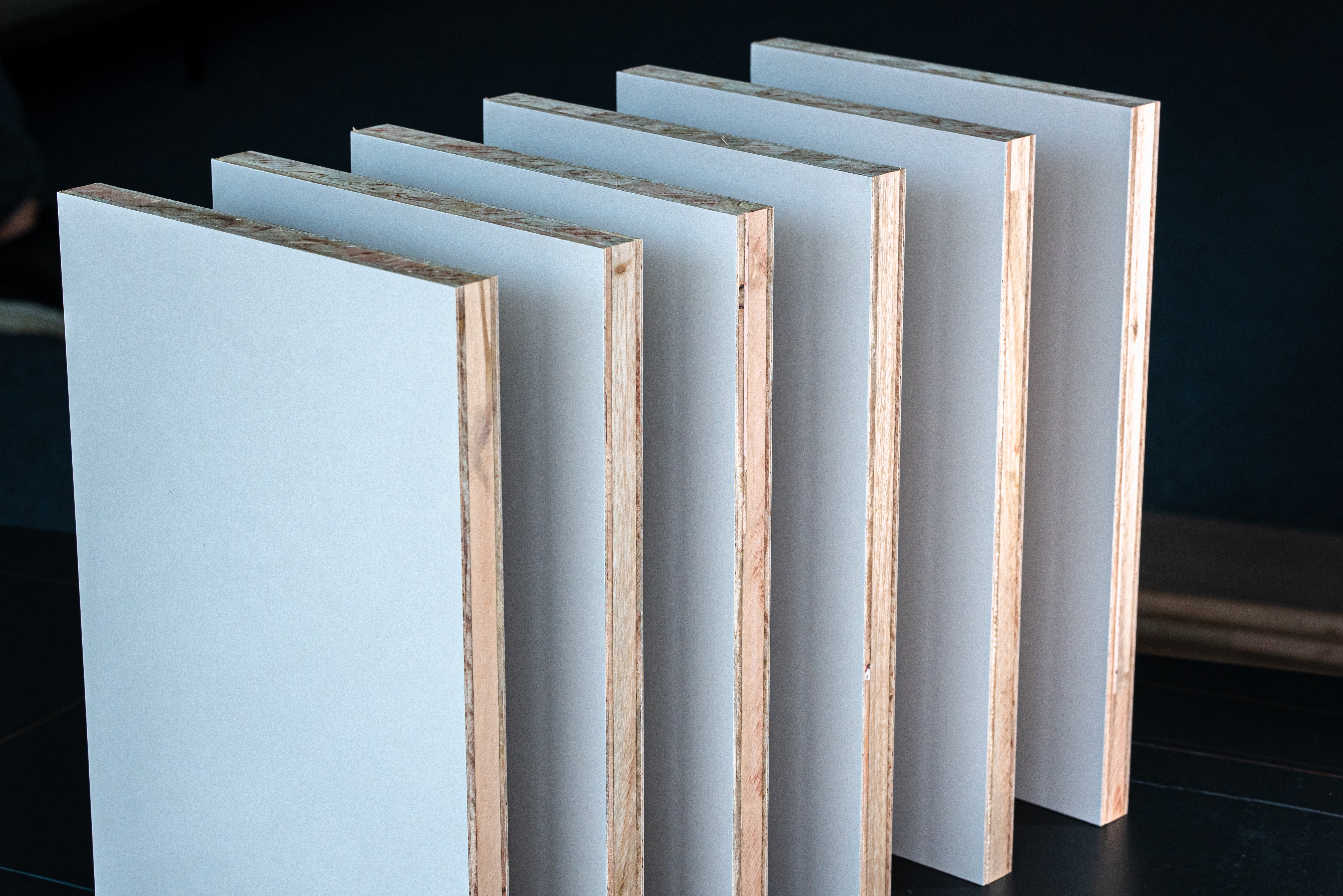
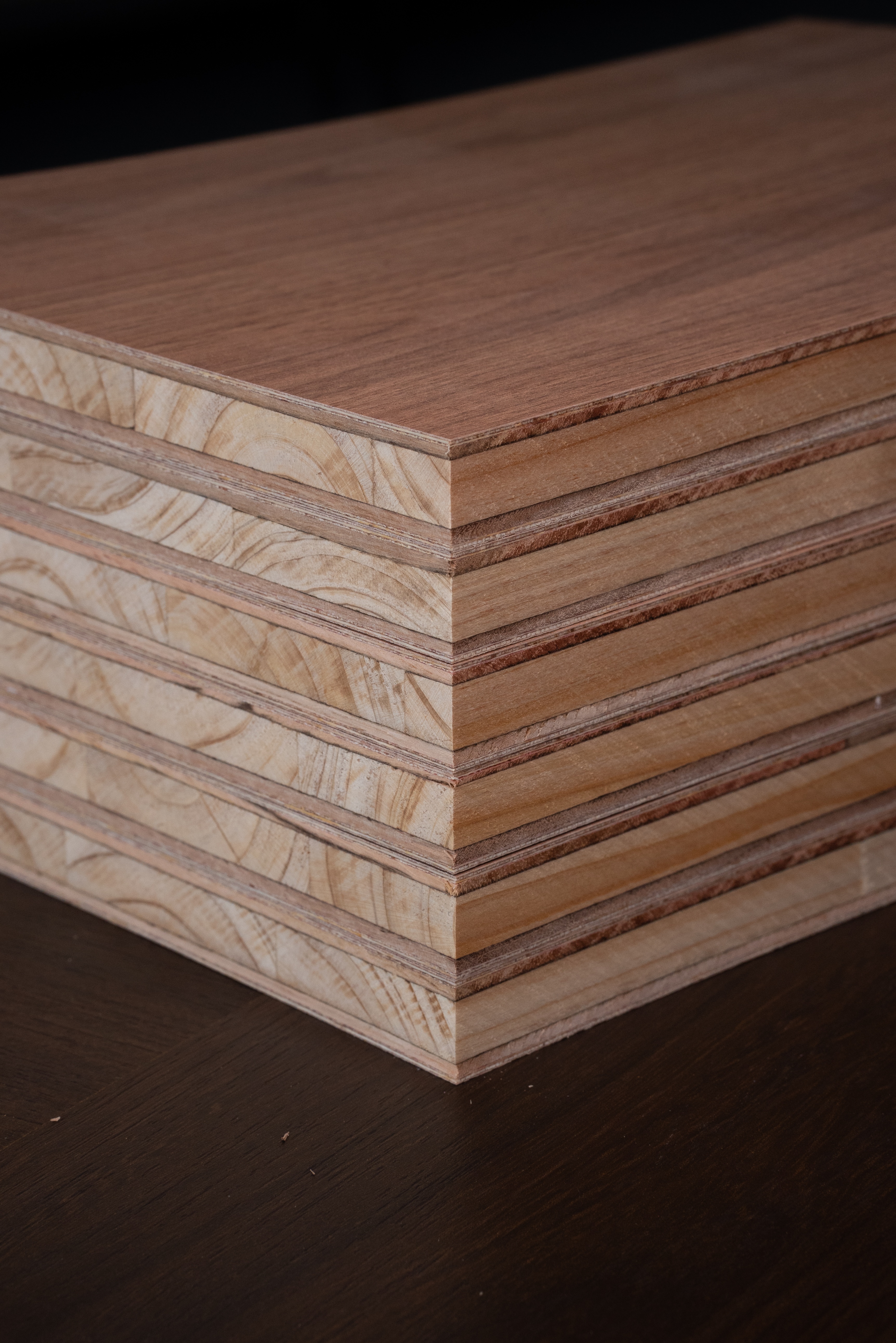
Blockboard, also called joinery board, uses wood strips as its central core with face and back layers. In a cabinet or furniture part, the panel acts as the substrate that is cut, machined, finished or covered with a selected surface. The core construction is different from a veneer-based plywood panel: the MLS001 and MLS002 blockboard models use strip cores, while Moluosen’s MLS004 eucalyptus multiplex plywood uses eucalyptus veneers.
That distinction helps clarify the purchase decision. A blockboard specification identifies the strip-core panel and its other selected features; it does not by itself establish structural load capacity, screw-holding values or a fire rating. The available product information specifies intended interior, non-structural applications and does not provide structural design values. For load-bearing, fire-rated or otherwise regulated assemblies, buyers should obtain the relevant verified performance information for the exact construction before specifying it.
Why choose premium blockboard for cabinetry and furniture?
1. A core suited to joinery components
MLS001 is made with a fresh Chinese fir strip core, identified as Cunninghamia lanceolata. MLS002 uses eucalyptus strips. Both use finger-jointed core construction and melamine-urea-formaldehyde (MUF) resin adhesive. The core species is therefore one of the choices to make when selecting a board. Buyers should consider the product’s stated construction, the finished part and the project specification rather than assuming that one species is suitable for every design.
Moluosen describes selected virgin timber and controlled kiln-drying before panel production. The stated purpose of controlled drying is to achieve consistent moisture content and support dimensional stability. For a manufacturer, this process detail matters because a panel is later sawn, drilled, joined, edged and finished. Stable raw material and fabrication controls support predictable component production, although actual performance also depends on panel handling, machining, installation and the environment in service.
2. Dimensional stability for doors and larger panels
Large door faces and tall wardrobe components make dimensional consistency an important part of material selection. Moluosen’s Dual-T Anti-Warp & Crack Control Technology is designed to improve dimensional stability and surface integrity. The company states that this technology can support full-height wardrobe doors up to 2,800 mm, subject to panel construction, design and application requirements. Treat that as an application-specific capability, not a guarantee for every door configuration. Panel thickness, width, finish, hardware, installation and service conditions still need to be confirmed for the actual design.
For cabinet makers, the practical benefit is that the panel specification can be considered alongside the dimensions and appearance of the finished piece. If a design uses a tall door, a broad cabinet side or a large furniture panel, ask the supplier to confirm the proposed construction and suitability for that component. Do not infer a maximum size for every thickness or surface combination from the technology description alone.
3. Face options that support different design and finishing plans
Blockboard can be supplied with a face selected for the intended appearance and production route. Moluosen lists TFL, HDF, natural wood veneer, PET and HPL options. These finishes are not interchangeable in every workshop process: the choice affects the look, the subsequent finishing work and the detailed order specification. Confirm whether the required finish applies to one side or both sides, and specify the back face as well as the visible face.
4. Moisture-resistant classification for intended indoor use
MLS001 and MLS002 are specified as MR, or Moisture Resistant. This classification does not make the panels waterproof, suitable for continuous wetting or exterior-grade. In kitchens and bathroom vanities, detailing matters: edges, joints and cut-outs should be protected from moisture, and the finished installation should be kept within the intended indoor conditions. A decorative surface’s resistance to incidental water contact is not the same as the core’s bonding classification. Specify the required moisture-resistance grade separately from the surface treatment.
5. Low-emission options that can be identified in the order
The blockboard specifications list formaldehyde-emission choices of ENF at ≤0.025 mg/m³, Ultra Low Emission at ≤0.037 mg/m³ and E0 at ≤0.050 mg/m³. These are selectable grades, not a claim that all panels have the same emission result or are formaldehyde-free. If a project has an emission requirement, identify the required grade in the purchase specification and confirm it for the precise model and configuration being ordered.
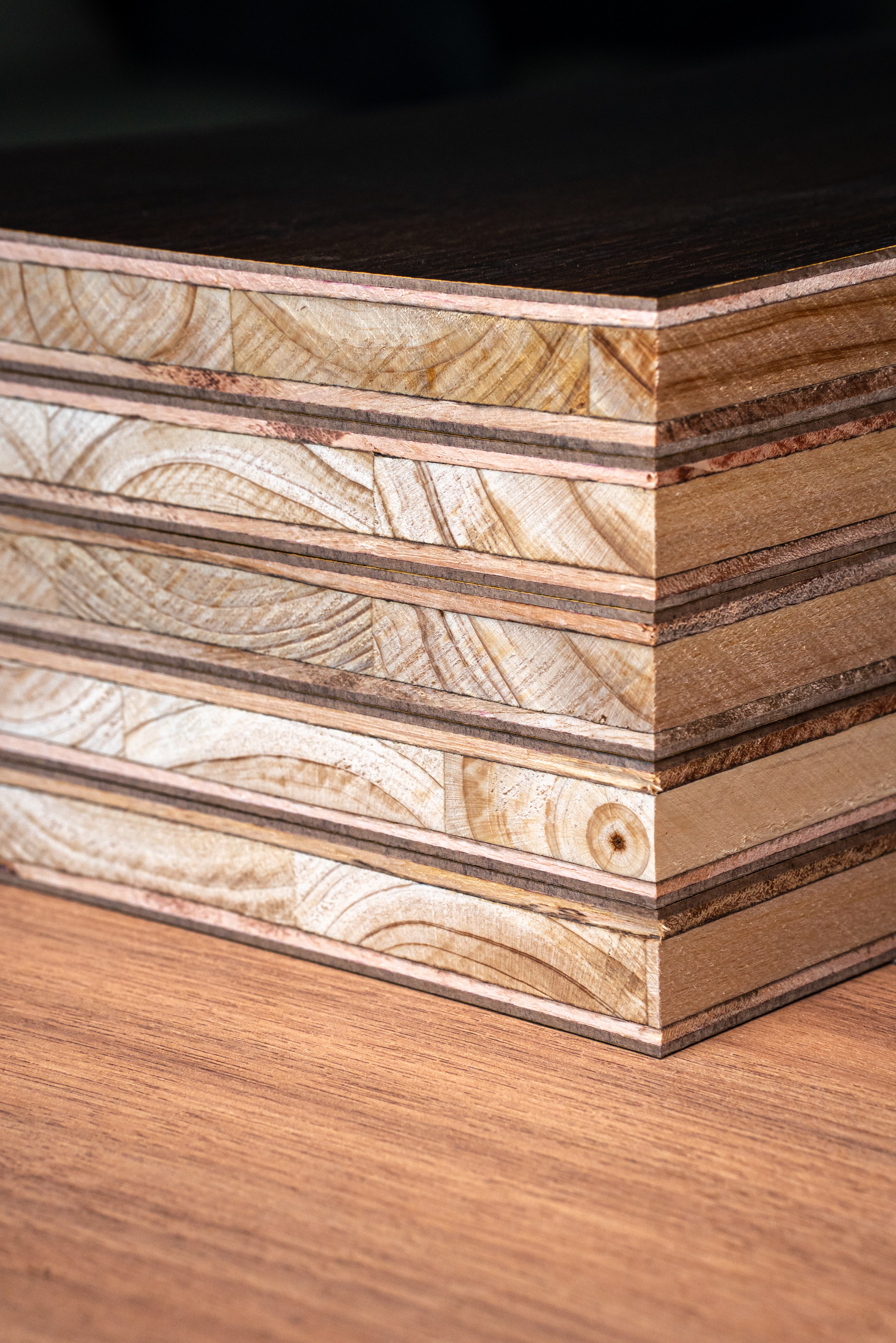
Choose a face: TFL, HDF, veneer, PET or HPL
Face selection links the panel to the project’s visual design and manufacturing process. The available options below reflect Moluosen’s listed blockboard surface choices. They describe product configurations, not an independent ranking of which finish is best.
| Face option | Listed specification | Useful selection consideration |
|---|---|---|
| Thermally Fused Melamine (TFL) | Over 300 colors are listed. | Specify the intended color and surface appearance, and confirm the selected face and back combination. |
| HDF | HDF layers are listed in 0.8, 1.2, 1.7 and 3.8 mm thicknesses. | HDF is listed as a face option for finishing routes such as paint or lacquer; confirm the intended finishing process and panel construction. |
| Natural wood veneer | Pine, poplar, okoume and birch veneer options are listed. | Choose the specified species and confirm whether the panel is intended for further finishing or veneer lamination. |
| PET | PET is listed as a surface option. | Confirm the required appearance, side configuration and compatibility with the fabrication plan. |
| HPL | HPL is listed as a surface option. | Confirm the exact HPL build-up and application with the panel supplier and fabricator. |
Surface selection is only one part of the order. Buyers should also record core type, panel dimensions, thickness, emission grade, moisture-resistance classification and any requested edge or finishing details. If panels are to be painted, laminated or further veneered after delivery, confirm the supplied face condition and relevant fabrication requirements rather than assuming every surface option needs the same treatment.
Blockboard thicknesses: specify for the part, not by habit
Moluosen lists blockboard thickness options that include 16, 18, 20, 22, 25, 35, 38, 40, 45, 50 and 60 mm across its product information. The model-specific specification differs: MLS001 lists 16, 18, 22, 25, 40, 50 and 60 mm in its product parameters; MLS002 lists 16, 18, 22, 25, 40 and 50 mm. The broader supplied range also includes additional options. Availability can depend on the selected model and face construction, so confirm the exact thickness before ordering rather than treating the entire list as available in every configuration.
For a cabinet or furniture part, thickness should be matched to the design, edge treatment, hardware, machining and installation details. A panel thickness alone does not establish the finished component’s load-bearing capacity or suitability for a particular span. For tall doors, thick furniture fronts or other large components, provide the supplier with the proposed dimensions and finish so that the panel construction can be reviewed against the application.
Panel sizes also vary by model. MLS001 lists 1,220 × 2,440 mm and 1,220 × 2,745 mm sizes. MLS002 lists 1,220 × 2,440 mm, 1,220 × 2,745 mm and 1,220 × 3,050 mm. Select dimensions with the cutting plan in mind, but confirm availability for the exact thickness and face. A larger nominal sheet may change nesting and yield; it does not remove the need to plan for edge finishing, defects allowances and the component schedule.
Application guide: where premium blockboard fits
Kitchen cabinets and bathroom vanities
Blockboard can be specified for cabinet components and vanity parts in interior, non-structural projects. For kitchens and bathroom vanities, the MR classification and appropriate surface option may be relevant, but neither means the panel can be left exposed to persistent water. Protect cut edges, joints, sink cut-outs and other moisture-prone details. Select a finish appropriate to the design, then confirm the core grade and emission requirement independently. These checks help prevent a decorative finish from being mistaken for a waterproofing system.
For production planning, write down the panel dimensions and thickness alongside the cutting list and surface treatment. Cabinet doors, cabinet sides, shelves and backs may have different design requirements, so one thickness or finish should not automatically be applied to all parts. The available information does not provide structural load ratings or shelf-span tables; those must be established by the furniture design and relevant verified data.
Wardrobes and closets
Wardrobe doors often prioritize a clean finish and consistent appearance across a broad face. TFL, veneer, PET and HPL provide different surface paths, while HDF may suit a planned paint or lacquer finish. For extra-tall door concepts, the Dual-T technology’s stated support for wardrobe doors up to 2,800 mm provides a specific point to discuss with the panel supplier. The actual panel build, door width, hardware and installation conditions remain important and need confirmation.
For closet interiors, a buyer may prioritize a coordinated finish across visible components, consistent sizing for repeat production and suitable edge treatment. Request a complete specification that distinguishes the face and back, core material, thickness and emission grade. That precision is especially useful when panels are purchased for repeat cabinet programs or cut across multiple room types.
Interior doors and door cores
Blockboard is used for interior door components and door-core applications within the stated non-structural interior scope. Moluosen’s case-study material includes a furniture factory order of Chinese fir core blockboards for making doors, but it does not provide a universal design approval or load rating. A door maker should confirm the panel construction, finished door dimensions, hardware and applicable market requirements. Do not use a general blockboard specification as evidence of fire-door or other regulated performance.
Bespoke furniture and decorative joinery
For furniture fronts, panels, wall panels and high-end interior joinery, a surface choice can help align the material with the intended design. The strip-core construction can be cut and machined as part of a furniture fabrication process, subject to the equipment and finishing method used. Confirm whether the supplied face is ready for the intended next operation; the product data does not specify machine settings, approved adhesives for every finish, or hardware performance. Those details should be agreed between the panel supplier and fabricator.
MLS001 or MLS002? A practical selection comparison
Both Moluosen blockboard models are specified for interior, non-structural applications, list MR moisture resistance and offer the main face options. Their core species and some model-specific size and thickness listings differ. The comparison below is limited to stated product facts; it is not a performance ranking.
| Selection point | MLS001 Chinese fir core | MLS002 eucalyptus core |
|---|---|---|
| Core | Fresh premium Chinese fir strips (Cunninghamia lanceolata), finger-jointed. | Selected eucalyptus strips, finger-jointed. |
| Adhesive | MUF resin. | MUF resin. |
| Moisture-resistance classification | MR—Moisture Resistant. | MR—Moisture Resistant. |
| Listed panel sizes | 1,220 × 2,440 mm; 1,220 × 2,745 mm. | 1,220 × 2,440 mm; 1,220 × 2,745 mm; 1,220 × 3,050 mm. |
| Thicknesses in model parameters | 16, 18, 22, 25, 40, 50 and 60 mm. | 16, 18, 22, 25, 40 and 50 mm. |
| Listed face choices | TFL, HDF, pine/poplar/okoume/birch veneer, PET and HPL. | TFL, HDF, pine/poplar/okoume/birch veneer, PET and HPL. |
| Stated application | Interior, non-structural cabinets, vanities, wardrobes, closets, doors, wall panels and furniture. | Interior, non-structural cabinets, vanities, wardrobes, closets, doors, wall panels and furniture. |
Use the comparison to narrow the specification, then confirm the selected configuration. MLS002 lists a 3,050 mm panel size, while MLS001’s model parameters list sizes up to 2,745 mm. Both products have overlapping listed thicknesses, but the available options differ. Core species, dimensions and the finished application are straightforward starting points; they do not substitute for verifying the complete construction, emission grade, face/back and commercial terms.
Step-by-step: specify blockboard with fewer assumptions
- Define the component. State whether the board will be used for cabinet parts, a wardrobe door, an interior door, furniture or wall panel. Identify any requirements that could make the assembly regulated or structural.
- Select the core model. Choose between Chinese fir strip-core MLS001 and eucalyptus strip-core MLS002 based on the project requirement. Do not assume core type alone establishes a strength or load rating.
- Set dimensions and thickness. Provide the sheet size, thickness and finished component dimensions. Check that the exact combination is available for the chosen model and surface treatment.
- Choose the face and back. Specify TFL, HDF, veneer, PET or HPL and identify the required face/back arrangement. For painted or veneered finishing, confirm the supplied surface condition and manufacturing process with the supplier.
- Confirm emission and moisture specifications. State the selected ENF, Ultra Low Emission or E0 grade and MR requirement where applicable. Do not substitute the surface’s incidental water resistance for the moisture classification.
- Plan fabrication and protection. Confirm edge treatment, cut-out protection, machining and installation details. Store panels dry and protect them from moisture before fabrication and installation.
- Agree acceptance criteria. Record inspection requirements, product identification, documentation and any project-specific checks in the order. Request a sample or technical confirmation where the finish or construction needs review.
- Model and core species
- Panel dimensions and thickness
- Face and back surface treatment
- Required emission grade and MR classification
- Intended application and component dimensions
- Edge, cut-out, finish and inspection requirements
Industry background: the finish is only part of the panel
In interior-panel procurement, decorative appearance can draw attention first, but a workable specification must describe more than color or gloss. Core construction, board size, thickness, face and back, adhesive, emission grade and moisture classification all form part of the product being purchased. For the fabricator, matching these details to the component plan helps avoid confusion between a surface feature and a panel-performance requirement.
It is also useful to separate the material specification from the finished assembly. MR blockboard with a decorative surface remains an interior panel; it is not thereby waterproof or suitable for exterior exposure. Likewise, the stated support for large wardrobe doors does not mean every door made from any listed thickness is automatically suitable. Consider the panel as one part of a designed joinery system, with edges, joints, hardware and installation addressed together.
Moluosen Technology Limited is an international wood-panel brand focused on premium blockboard and plywood for interior applications. Its company information describes a 100,000 m² production facility in Guangxi, China, and quality control across timber selection, kiln-drying, core preparation, panel assembly, hot pressing, finishing and final inspection. These manufacturing details provide context for procurement discussions; the project’s exact technical and documentation requirements still need to be confirmed for the ordered product.
Frequently asked questions
Can Moluosen blockboard be used for kitchen cabinets and bathroom vanities?
Yes. MLS001 and MLS002 are specified for interior, non-structural kitchen cabinets and bathroom vanities, among other applications. Both list MR moisture resistance, but MR does not mean waterproof or suitable for continuous wetting. Protect edges, joints and cut-outs from moisture and confirm the required surface and emission grade for the project.
What blockboard thicknesses and surface options can I request?
Moluosen lists thickness options across its blockboard information from 16 mm to 60 mm, with model-specific choices. MLS001 and MLS002 do not share identical listed thicknesses, so confirm the exact model and configuration. Surface choices include TFL, HDF in listed layer thicknesses of 0.8, 1.2, 1.7 or 3.8 mm, pine, poplar, okoume or birch veneer, PET and HPL.
How should I choose between Chinese fir and eucalyptus core blockboard?
MLS001 uses a fresh Chinese fir strip core, while MLS002 uses eucalyptus strips. Both use MUF resin, are specified as MR and are intended for interior, non-structural applications. Compare the model-specific dimensions and thicknesses with the component design, then confirm the complete face, emission and moisture specifications. The available specifications do not provide a comparative structural load rating.
Can I request a sample or a project-specific quotation?
Yes. Buyers can contact Moluosen Technology Limited to discuss a sample or quotation and provide the required model, dimensions, thickness, surface, emission grade and intended application. Confirm sample arrangements, configuration availability and commercial terms directly with the company. This helps ensure that any quotation or sample represents the intended specification rather than a different panel build.
Conclusion: match the panel to the finished component
Premium blockboard can serve cabinet, wardrobe, door and furniture production when the selected panel construction fits the intended interior component. Moluosen’s MLS001 Chinese fir core and MLS002 eucalyptus core options provide strip-core alternatives, with TFL, HDF, veneer, PET and HPL face choices. Model-specific thicknesses and sizes, MR classification and emission-grade options should be stated clearly in the purchase specification. For tall doors, wet-area cabinetry or other demanding designs, share the component details with the supplier and confirm the full configuration before production.
Discuss a blockboard specification
Share your intended application, core preference, panel dimensions, thickness, surface treatment and emission requirement to request product information, a sample discussion or a quotation from Moluosen Technology Limited.
Email: elmer.y@moluosen.com | Tel: +86 722-665-0011
Have Questions or Need More Details?
Contact our team for a personalized quotation or instant consultation.
Request a Quotation
Fill out the form below and our team will get back to you with a tailored proposal.
WhatsApp Direct Chat
Prefer to chat in real-time? Message us on WhatsApp for instant assistance & quick answers.
- Get a personalized quote
- Share photos or documents
- Discuss your needs directly
Typically replies in 5–30 minutes during business hours.