Formwork Plywood: Wet Concrete, Release Agents and Reuse
Formwork Plywood: How It Interacts With Wet Concrete and Release Agents
Formwork plywood is a temporary concrete-contact panel: it shapes fresh concrete, transfers the pressure of the pour into the supporting framework, and is then stripped, cleaned and reused. Its real-world behaviour comes down to three interfaces — water against the panel surface, load through the panel core, and the release layer between the panel face and the concrete. When those three are managed, a panel delivers its stated reuse range. When they are ignored, an expensive film-faced sheet behaves like cheap sheathing after two pours.
This guide explains what happens at the concrete–panel interface, how release agents actually work on coated and film-faced surfaces, and how to match a specific grade to a specific project. The reference products are the four formwork grades from CYCLEPLYWOOD, the construction-formwork brand under WANG ⼤王椰 Group.
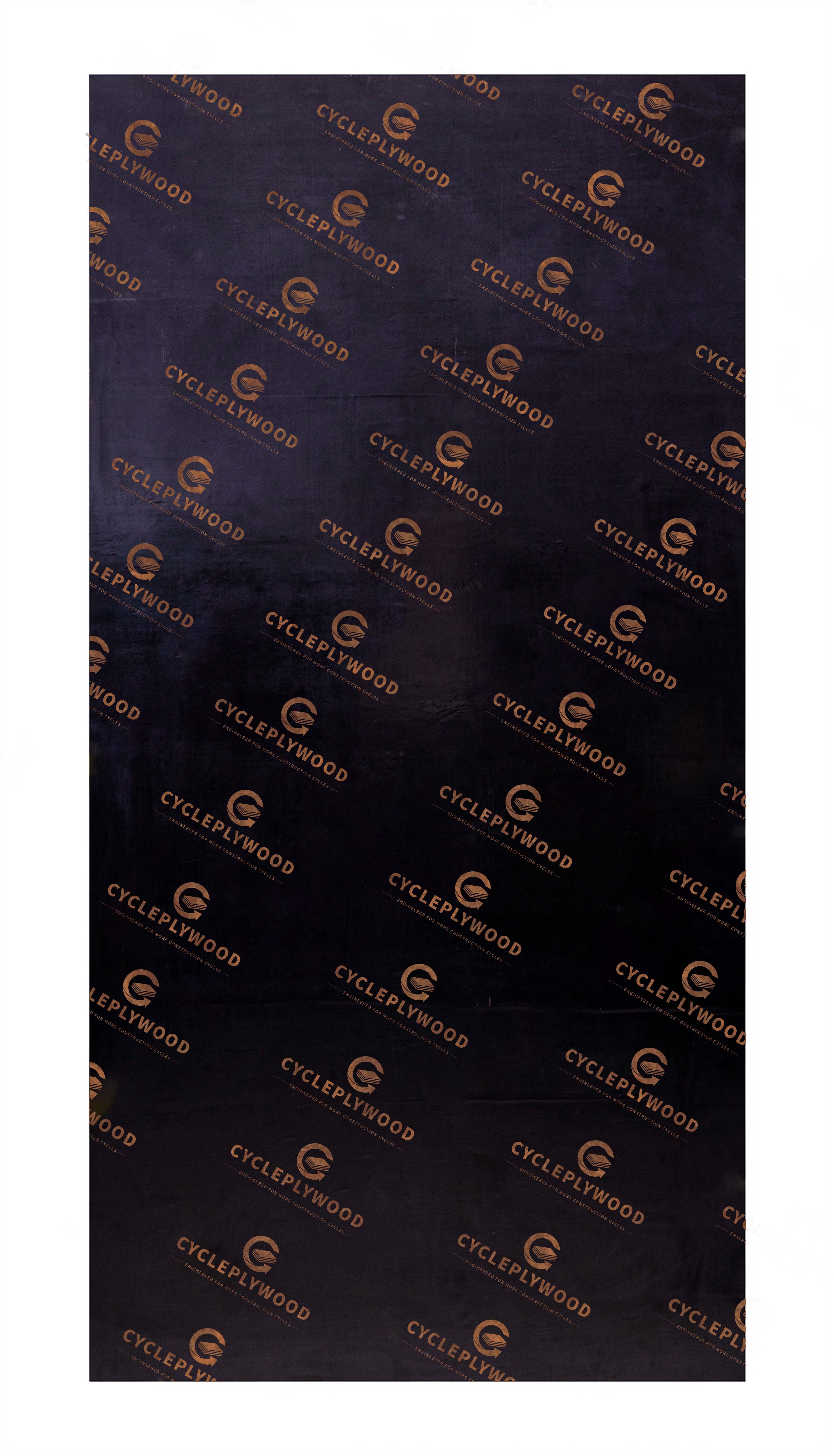
CWL004 Premium Film-Faced Formwork Plywood: all-eucalyptus finger-joint core, eucalyptus face and back, 75 g/m² melamine film, stated reuse of 15–16 cycles.
What a Formwork Panel Is Actually Asked to Do
A concrete formwork panel is a temporary works component, not a finished building product. In service it performs four jobs at the same time, and each one stresses a different part of the panel.
Shape and contain. The face must stay flat and tight against fresh concrete so the panel geometry becomes the concrete geometry, and so grout does not escape at joints.
Carry pressure. Fresh concrete behaves like a heavy fluid until it sets. That pressure has to travel through the panel, into joists, walers and props. Panel thickness and support spacing are therefore engineering decisions, never catalogue guesses.
Resist water and cement chemistry. The face is in continuous contact with water, cement paste, fines and sometimes admixtures for the whole curing window — in sun, rain or wind.
Release cleanly, then survive stripping. The panel must let go of the concrete without tearing the surface, then tolerate prying, lifting, cleaning and re-fixing so it can be used again.
Most formwork failures trace back to one of these four jobs being under-specified — usually the fourth, because reuse is where the money is.
Why Ordinary Plywood Fails on a Concrete Site
General-purpose plywood and formwork plywood can look similar in a warehouse and behave completely differently after one pour. The differences are rarely dramatic on day one; they show up on pour three.
Edge swelling is the classic failure mode. Cut edges and tie holes are bare timber. Water enters there faster than anywhere else on the panel, the veneers lift, the edge grows, joints open, and grout loss appears on the concrete face. Every specification conversation about water-resistant formwork plywood should therefore start with edge sealing, not with the film.
Surface breakdown drives patch-and-repair costs. A face that raises fibre or blisters will transfer that texture into the concrete. The visible cost is cosmetic; the real cost is the labour spent grinding and patching, plus the schedule slip while a slab face is made good.
Inconsistent thickness and core quality create deflection and joint steps. Voids, overlaps and variable veneer thickness reduce effective stiffness and make panel joints difficult to close. On repetitive floor cycles, small joint steps repeat on every level.
Poor release multiplies handling damage. A panel that bonds to the concrete needs more force to strip. More force means bent corners, chipped faces and shorter panel life.
How Formwork Plywood Interacts With Wet Concrete and Release Agents
The interaction is easiest to understand as a sequence, because the panel surface changes as the pour progresses.
Step 1 — Contact: pressure, paste and surface wetting
When concrete is placed, the panel face is immediately wetted by a mixture of water, cement, fines and admixtures. Under vibration, this paste is pushed into every surface micro-texture. If the face has an intact, closed coating, the paste sits on top of it. If the face is bare wood, porous or damaged, the paste keys mechanically into the fibre and the panel and the concrete begin to behave like one body.
This is why surface continuity matters more than surface colour. A melamine film on CWL003 and CWL004 are both continuous barriers.
Step 2 — Water: separate the surface question from the core question
Two different water questions get confused in procurement conversations, and confusing them leads to wrong expectations.
The surface question is about incidental water contact and staining during the pour and the wash-down. A properly formed coating or film resists that contact within controlled interior or site conditions. It is not a waterproofing membrane.
The core question is about the adhesive that bonds the veneers. All four CYCLEPLYWOOD formwork grades use water-resistant urea-formaldehyde (UF) resin in the core. That is a water-resistant bonding specification for formwork service — it is not a phenolic core bond, and it should not be read as a marine-grade or BWP classification. A melamine film on the face does not mean the core uses melamine adhesive; surface system and core adhesive are independent specifications.
Practical consequence: the panel tolerates wet concrete, wash-down and humid sites, but it still needs sealed edges, dry storage and flat stacking between uses. Water-resistant formwork plywood is durable in service, not indestructible in a yard.
Step 3 — Release agents: building a controllable interface
Release agents exist because concrete bonds to almost anything it can mechanically key into. The agent forms a thin sacrificial layer at the panel face so that the bond develops between the concrete and the release film rather than between the concrete and the panel. When the formwork is stripped, the break happens at that weak plane.
Four practical rules govern how well this works:
Match the agent to the surface system. Film-faced and resin-coated panels respond differently to different agent chemistries. Aggressive solvents and heavily charged agents can attack or dull a coating, and a dulled face releases less predictably on the next cycle. Compatible release agents and cut-edge sealants should be selected according to supplier guidance and the project’s own requirements.
Apply thin and uniform. Excess release agent is a common cause of surface defects: it can accumulate in corners, trap air and leave blotches or colour variation on the concrete. A thin, continuous film is the goal, not a wet layer.
Treat the first use of a new panel as a break-in cycle. New panels should be inspected and prepared before the first pour rather than during it, and the release routine established on that first cycle should be repeated consistently afterwards. Consistency is what makes reuse predictable.
Re-apply between cycles, and never rely on residual film. After stripping, the panel is cleaned and the release layer is re-established. Skipping this step to save time is the fastest way to convert a 15–16 cycle panel into a 5 cycle panel.
One honest boundary: the product datasheets do not publish a wear-resistance rating. Film paper weight — 60 g/m² on CWL003 and 75 g/m² on CWL004 — is a material specification, not a numerical abrasion rating and not a film-thickness measurement. Heavier film paper should not be read as a proportional increase in wear life.
Step 4 — Cut edges, tie holes and joints: where water actually gets in
Almost every premature formwork panel failure starts at a cut. Sawing and drilling expose raw veneer and open the core to direct water ingress. Seal cut edges and around tie holes with a compatible sealant, keep joints tight, and protect edges during handling and stacking. On wet trades, sealing an edge costs minutes; replacing a swollen panel costs a cycle.
Step 5 — Temperature and site exposure
These formwork products are specified for construction-site conditions, including variable ambient humidity, splashing fresh concrete and intermittent water contact, with a stated operating range of approximately −20 °C to +65 °C. Cold-weather working, accelerated curing and heated enclosures are project conditions that should be reviewed as part of the formwork method statement rather than assumed from the panel datasheet.
Inside a CYCLEPLYWOOD Panel: the Material Choices Behind the Behaviour
Panel behaviour at the concrete interface is decided long before the panel reaches site. Four manufacturing decisions matter most.
Fresh veneer selection. The four grades are built either on fresh pine and eucalyptus veneers in a finger-joint mixed-species core ( CWL003) or on selected fresh all-eucalyptus veneers with finger-joint construction and eucalyptus face and back ( CWL004). Fresh veneer, rather than recycled or reclaimed stock, gives a more consistent core and a more stable face.
Controlled kiln-drying. Timber is kiln-dried before production to achieve consistent moisture content. This is the step that supports dimensional stability and reduces the risk of the panel moving after it has been cut to size on site.
High-temperature, high-pressure pressing. Panels are manufactured at 130 °C on a 600-ton press. This is a manufacturing parameter, not a permissible formwork load — press capacity says nothing about allowable concrete pressure.
Surface system selection. CWL003 and CWL004 use melamine film, at 60 g/m² and 75 g/m² paper weight respectively. The surface system is the single biggest lever on release behaviour and stated reuse.
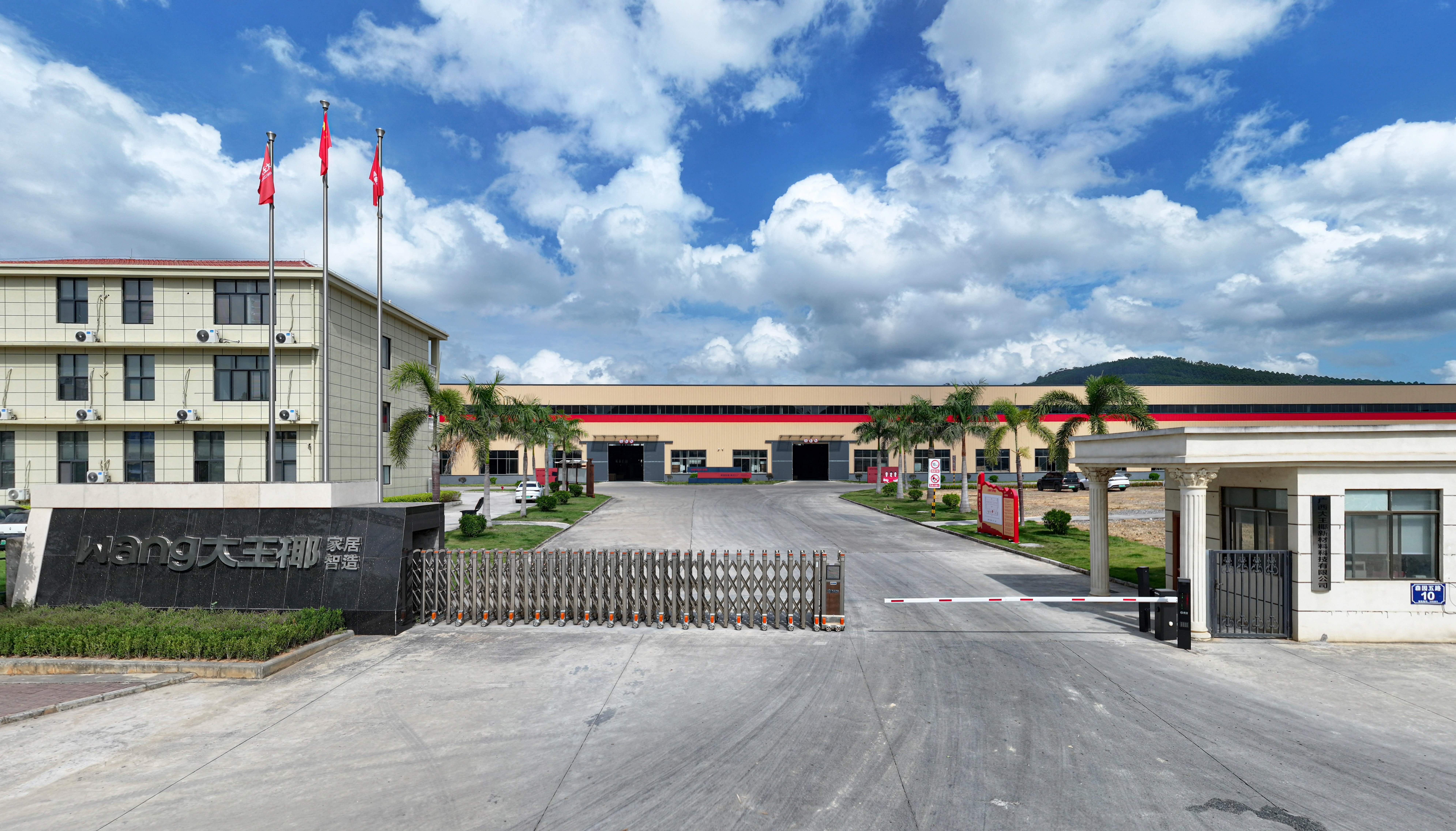
Moluosen Technology Limited operates a 100,000 m² production facility in Guangxi, China, with automated production and quality control from timber selection through final inspection.
The Four CYCLEPLYWOOD Grades and Where Each Belongs
All four grades share the same panel sizes (915 × 1830 mm and 1220 × 2440 mm) and the same thickness options (12, 14 and 18 mm). The differences are in core construction and surface system, and those differences show up as different stated reuse ranges.
Red Premium Formwork PlywoodSelected fresh all-eucalyptus veneers, finger-joint construction; eucalyptus face/backPhenolic resin coating9–10 cyclesCWL003
Standard Film-Faced Formwork PlywoodFresh pine + eucalyptus veneers, finger-joint mixed-species core; full-piece pine face/backMelamine film, 60 g/m² paper weight9–10 cyclesCWL004
Premium Film-Faced Formwork PlywoodSelected fresh all-eucalyptus veneers, finger-joint construction; eucalyptus face/backMelamine film, 75 g/m² paper weight15–16 cycles
Read the datasheet correctly. The reuse figures above are stated product-use ranges, not a guarantee of performance on every site. Actual cycles depend on concrete pressure, stripping technique, handling, cleaning, release-agent discipline and storage. The datasheets also do not publish bending strength, modulus of elasticity, allowable loads or a formaldehyde emission class — those values must be established separately for projects that require them.
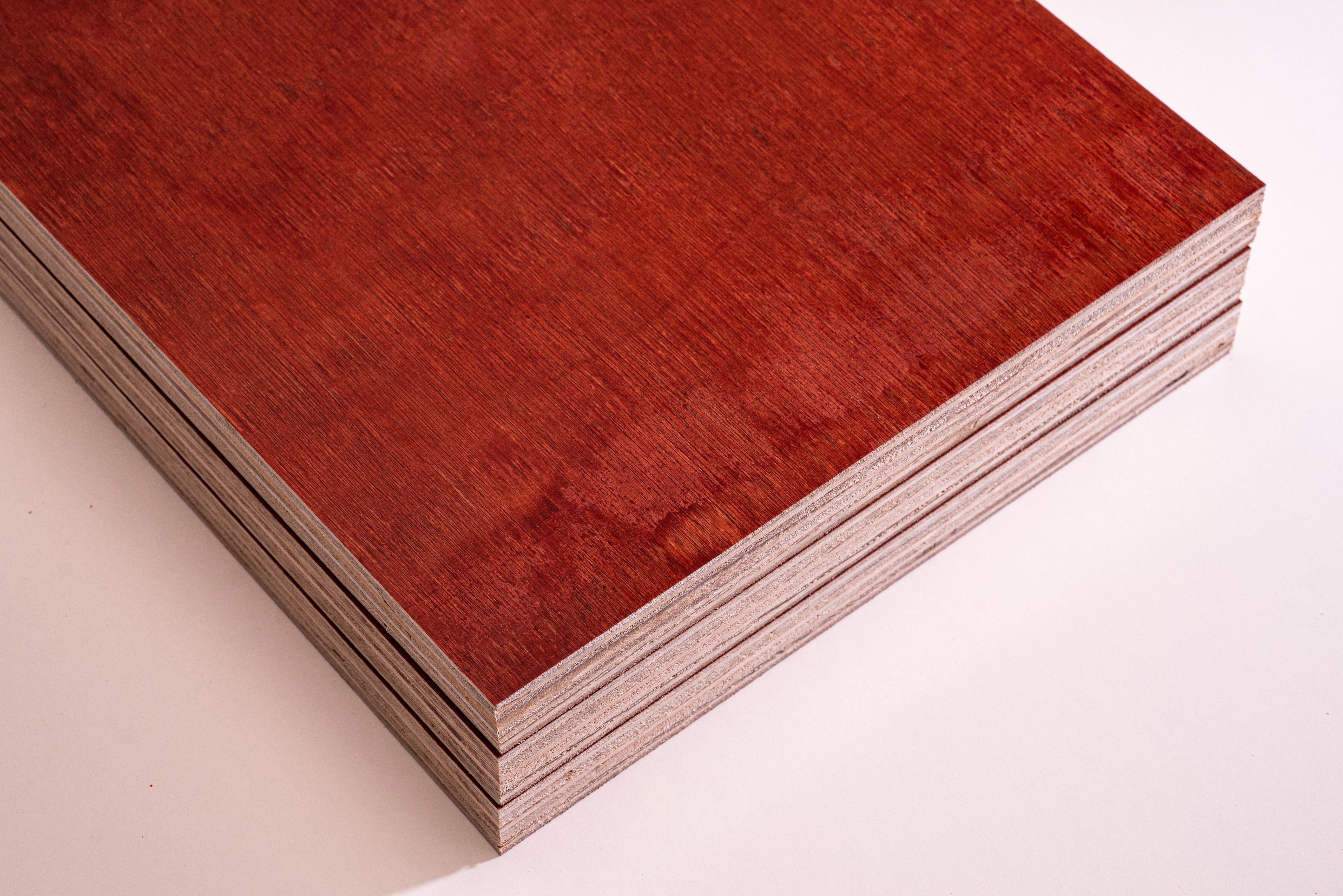
CWL002 Red Premium Formwork Plywood: all-eucalyptus finger-joint core with a phenolic resin coating and a stated reuse of 9–10 cycles.
Step-by-Step: Running a Panel Through Its Full Life Cycle
Fix the formwork design first. Establish concrete pressure, construction loads, panel thickness and support spacing. Panel selection follows the design — not the other way round.
Choose the surface system by finish and reuse target. High cycle counts and demanding fair-face finish point to film-faced; short-duration work with a tighter initial budget points to a resin-coated standard grade.
Choose size and thickness. Match the panel module to the structure to minimise cutting, then confirm thickness against the design.
Prepare before the first pour. Seal cut edges and tie holes, inspect faces for transit damage, and confirm the release agent is compatible with the coating or film.
Install and close joints. Fix to designed joists and walers, keep joints tight, and protect the face from dropped fixings and foot traffic.
Apply release agent consistently. Thin, uniform, complete coverage — and the same routine on every cycle.
Place and vibrate to the approved method. Vibration intensifies paste contact at the face; excessive vibration at the panel increases surface wear.
Strip at the specified strength. Use proper stripping tools and techniques. Prying against a panel edge is the fastest way to destroy the part that keeps water out.
Clean, inspect and store flat. Remove residue, re-seal damaged edges, stack flat on dry bearers under cover, and retire panels against agreed acceptance criteria rather than by age.
Use Cases: Where Each Grade Pays Off
Slab soffit formwork. Large areas, repeated floor cycles and a visible finished surface. Film-faced grades are usually the natural fit here because release quality and cycle count both matter, and because a consistent face reduces patching on every level.
Wall and column formwork. Release quality dominates, because the vertical face is what the client sees, and edges take the most handling damage. Edge sealing and careful stripping technique matter as much as the panel grade.
Beam formwork. Thickness and support design carry more weight than surface choice. Confirm the panel thickness against the formwork design before optimising for finish.
High-rise repetitive construction. Where a panel is cycled many times, cost per use — not cost per sheet — is the deciding metric. A higher-cycle grade typically wins once the project runs beyond a handful of cycles.
Short-duration or budget-constrained work. It is positioned for projects with limited reuse requirements and tighter initial purchasing budgets: 5–6 stated cycles, pine/eucalyptus mixed core, phenolic resin coating.
Wet or humid site conditions. Water-resistant UF core bonding plus a continuous face system gives the panel its service tolerance, provided cut edges are sealed and storage is dry.
A building-materials distributor in Qatar ordered 300,000 sheets of CWL004 in 1220 × 2440 mm, 18 mm for concrete construction work. The recorded feedback cites dimensional stability and reliable panel performance, along with on-time delivery, packaging and service — the factors that decide whether a repeat container order is placed.
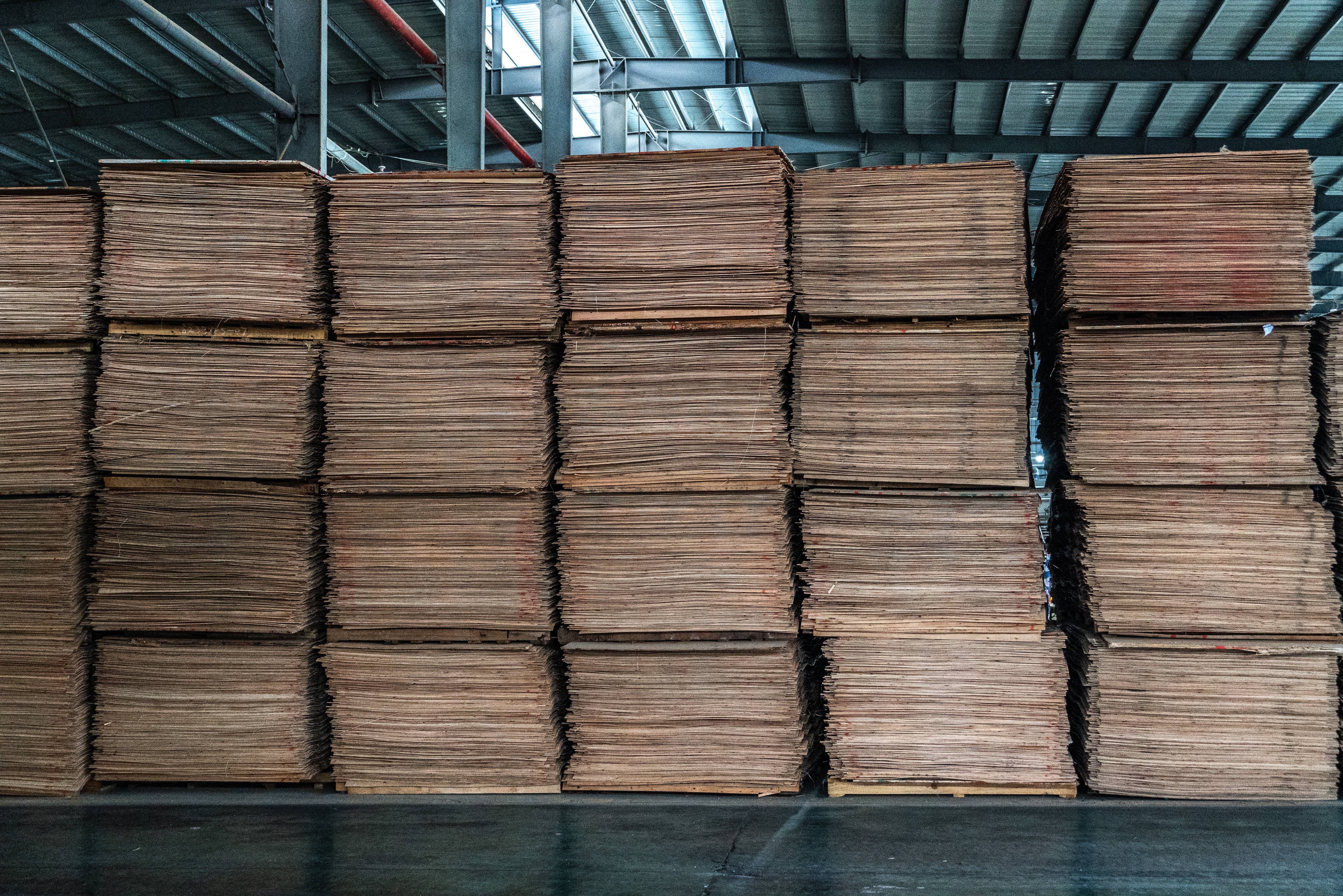
Raw material control starts in the warehouse: veneer selection and moisture control are the first steps in panel stability.
Cost Per Use: the Number That Should Decide the Grade
Formwork panels are bought by the sheet and consumed by the cycle. Comparing sheet prices alone routinely produces the wrong decision. The reference case is the two red formwork grades at 915 × 1830 × 18 mm, EXW:
The premium grade costs more per sheet and less per pour. That inversion is the core commercial argument for specifying by reuse rather than by unit price — and it only holds if the site actually achieves the reuse range, which is where release-agent discipline, edge sealing and storage come back into the calculation.
The same logic applies across the range. At the same size and thickness, CWL003 is priced roughly 2% above CWL001 while moving from 5–6 to 9–10 stated cycles. CWL004 is roughly 7% above CWL002 and moves from 9–10 to 15–16 cycles. CWL004 is roughly 21% above CWL003, reflecting both the all-eucalyptus core and the heavier film paper. Listed loading for these grades is 1,517 sheets per 40 ft HC at the comparison size, so freight per sheet is broadly comparable and the purchase decision stays focused on cycles.
Procurement Checklist Before Booking a Container
Confirm the surface system, not just the model code. Phenolic resin coating and melamine film are different systems with different release behaviour.
Confirm core construction. Pine/eucalyptus mixed-species cores and all-eucalyptus cores behave differently in machining and handling.
Confirm size and thickness against the formwork design. 915 × 1830 mm and 1220 × 2440 mm, in 12, 14 or 18 mm.
Agree the reuse target in writing. Treat the stated range as a planning assumption subject to site conditions.
Agree edge sealing and release-agent responsibility. These are site decisions, and they determine whether the reuse range is reached.
Request certification and test documentation. Listed certifications are ISO 9001:2015, ISO 14001:2015, ISO 45001:2018, FSC and PEFC/CFCC Chain of Custody.
Confirm loading, mixed loading and delivery terms. Minimum order basis is one 40 ft HC container, with model-specific applicability and mixed loading to be confirmed.
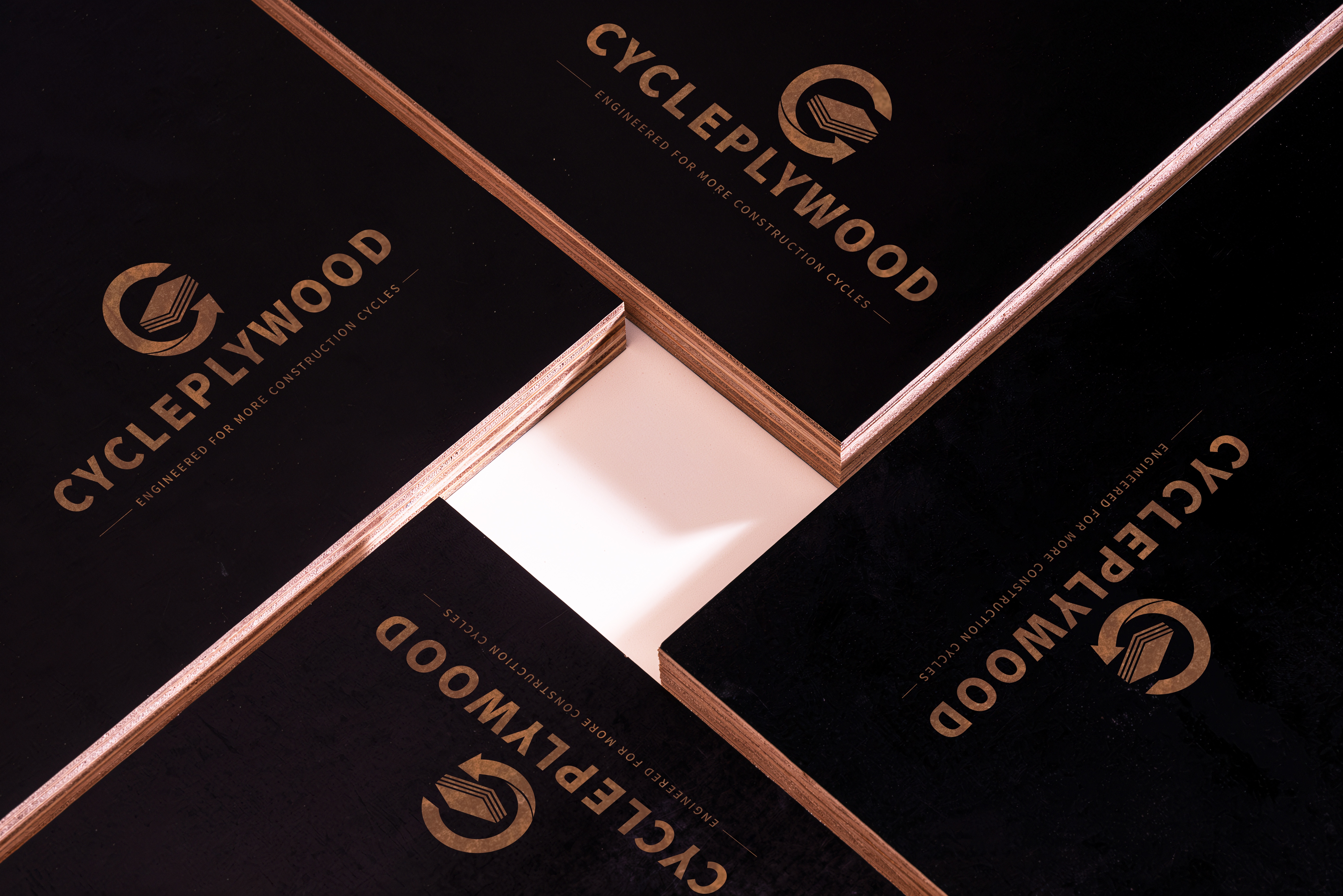
CWL003 Standard Film-Faced Formwork Plywood: 60 g/m² melamine film over a fresh pine/eucalyptus finger-joint core, stated reuse of 9–10 cycles.
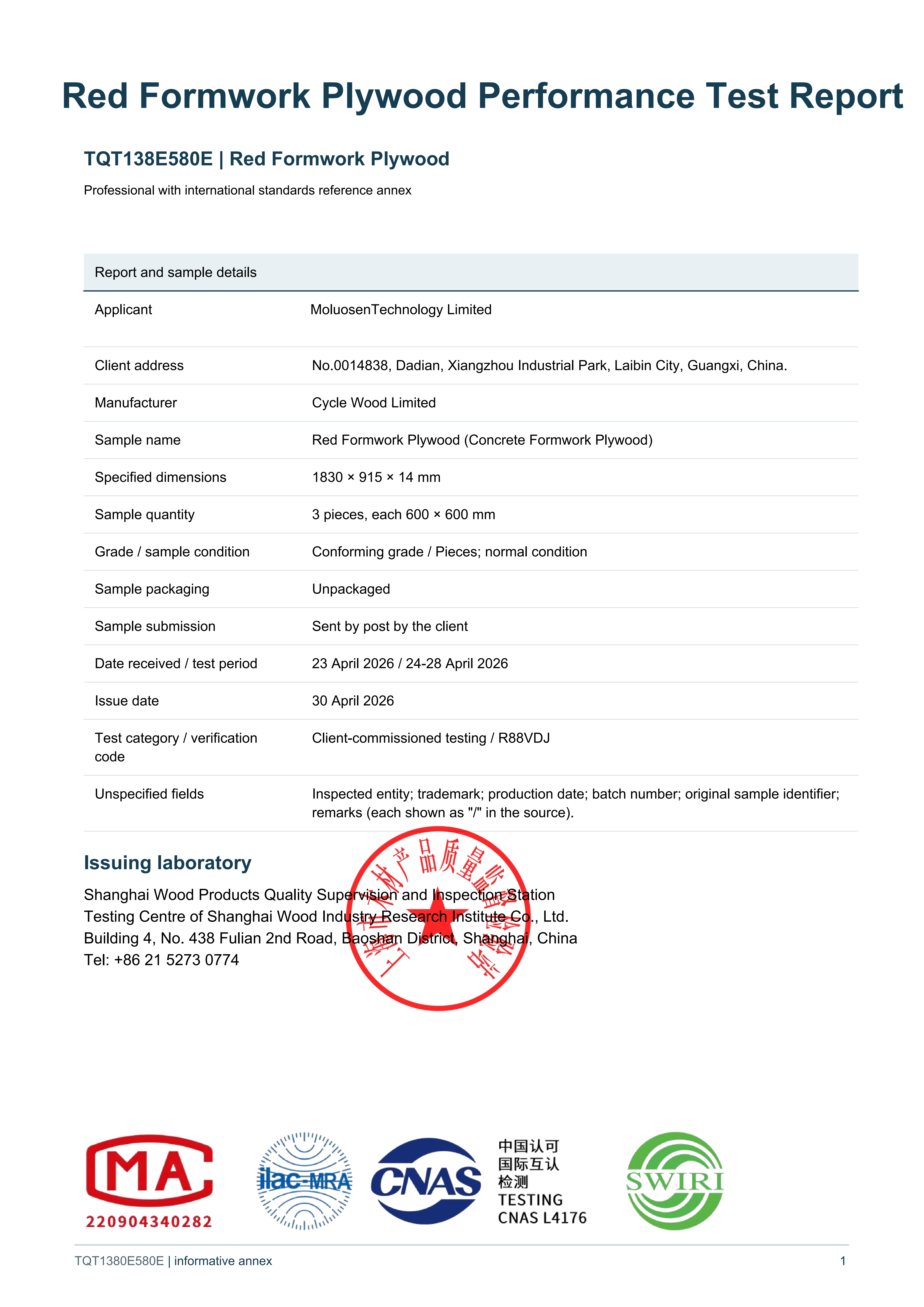
Performance test documentation for standard and premium red formwork plywood, issued through the Shanghai Wood Products Quality Supervision and Inspection Center.
Frequently Asked Questions
What certifications do CYCLEPLYWOOD formwork plywood panels carry?
The listed certifications are ISO 9001:2015, ISO 14001:2015, ISO 45001:2018, FSC and PEFC/CFCC Chain of Custody. They cover management systems and chain of custody; they are not a statement of panel load capacity. The datasheets do not publish bending strength, modulus of elasticity, allowable formwork loads or a formaldehyde emission class, so any project requiring those values must confirm them separately.
Can panel thickness, film type and panel size be customized?
Yes. OEM/ODM service covers film types and thickness as well as panel thickness, on a minimum order basis of one 40 ft HC container, with model-specific applicability and mixed loading to be confirmed. Stated formwork capacity is 360,000 sheets per month, inspection is 100% testing, and delivery is one to two weeks after payment.
How can I validate a panel before committing to a full container?
There is no published sample programme; the stated minimum order basis is one 40 ft HC container, and model-specific applicability plus mixed loading can be confirmed with the supplier. In practice, buyers validate by matching the datasheet to the formwork design, confirming the surface system and film paper weight, reviewing the listed certification and performance test documentation, and agreeing inspection and acceptance criteria before production.
What is the lead time and minimum order quantity?
Lead time is stated as one to two weeks after payment, on a minimum order basis of one 40 ft HC container. To start a quotation, send the panel size, thickness, surface system, required reuse target and destination port to Moluosen Technology Limited at elmer.y@moluosen.com or via WhatsApp on +86 176-6532-7137.
Conclusion: Specify the Interface, Not Just the Panel
Formwork plywood succeeds or fails at the interface. Water-resistant UF core bonding and a continuous phenolic resin or melamine film surface give the panel its service tolerance; release-agent discipline, edge sealing and honest stripping practice decide whether that tolerance turns into 5 cycles or 16.
For specifiers, the practical sequence is short: fix the formwork design, choose the surface system by finish and reuse target, choose the grade by cost per use rather than cost per sheet, then protect the edges. CWL001 covers short-duration, budget-led work; CWL003 and CWL004 deliver higher stated reuse with a film-faced finish; CWL002 sits between them for projects that want an all-eucalyptus core with a resin-coated surface.
Moluosen Technology Limited supplies its interior blockboard and plywood range to furniture and joinery customers worldwide, while CYCLEPLYWOOD serves concrete formwork buyers across the GCC and Middle East, Central Asia, South Asia, Africa, Europe and Oceania — both drawing on the same manufacturing base, quality systems and certification framework. The interior range — including MLS001 Chinese Fir Core Blockboard, MLS002 Eucalyptus Core Blockboard and MLS004 Eucalyptus Multiplex Plywood Panel (LVL) — is specified for interior, non-structural applications and is not a substitute for formwork grades.
Request a Formwork Plywood Quotation
Tell us the concrete element, panel size, thickness, surface system and reuse target, and we will recommend the grade and confirm loading for your container.
Moluosen Technology Limited
Website: www.cycleplywood.com | Formwork brand: CYCLEPLYWOOD
Email: elmer.y@moluosen.com | Tel: +86 722-665-0011 | WhatsApp: +86 176-6532-7137
Address: No.0014838, Dadian, Xiangzhou Industrial Park, Laibin City, Guangxi, China
Perfection From Log to Detail.
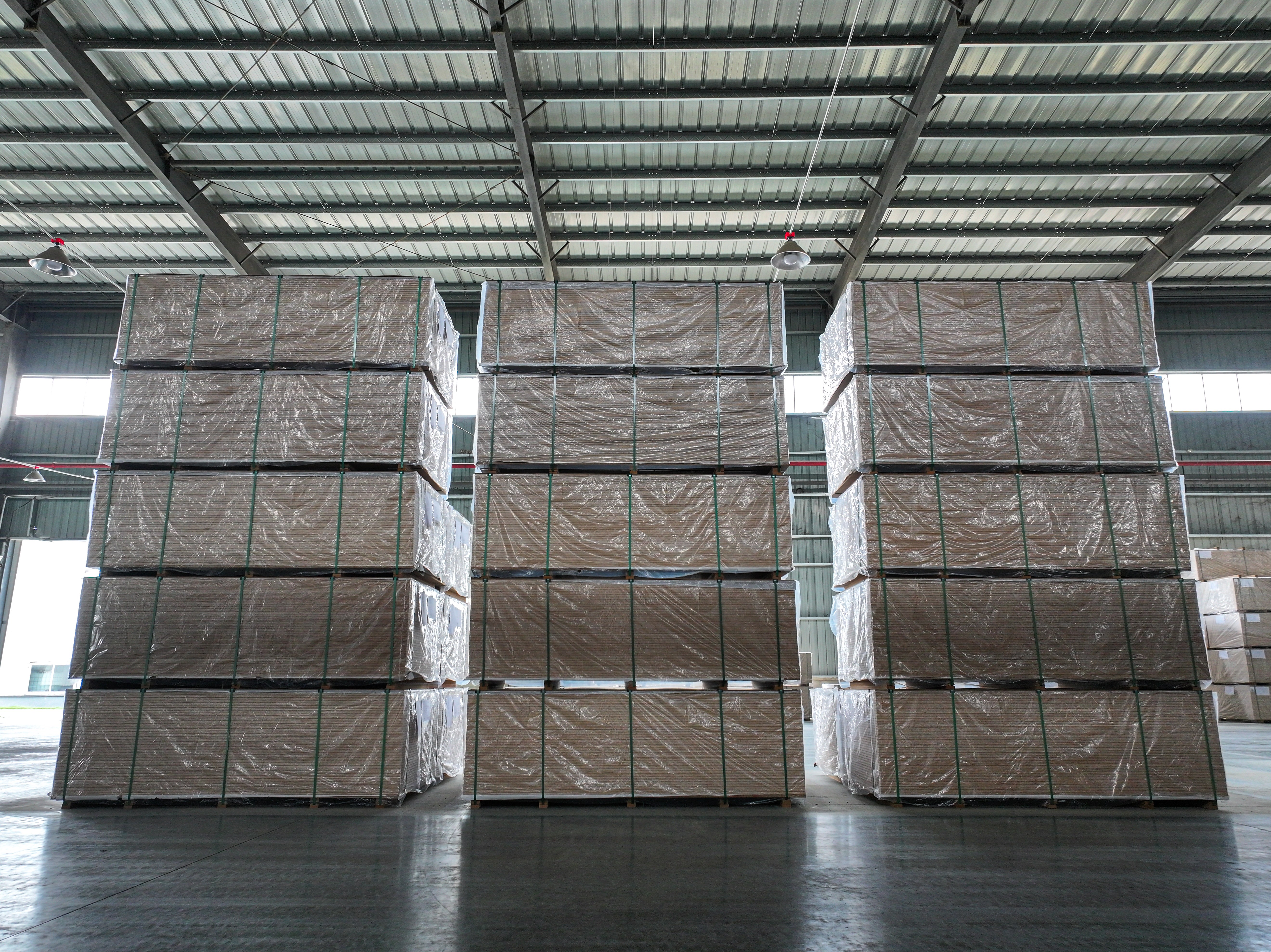
Finished panel warehouse: packing and loading discipline protect the faces and edges that determine reuse.
Have Questions or Need More Details?
Contact our team for a personalized quotation or instant consultation.
Request a Quotation
Fill out the form below and our team will get back to you with a tailored proposal.
WhatsApp Direct Chat
Prefer to chat in real-time? Message us on WhatsApp for instant assistance & quick answers.
- Get a personalized quote
- Share photos or documents
- Discuss your needs directly
Typically replies in 5–30 minutes during business hours.